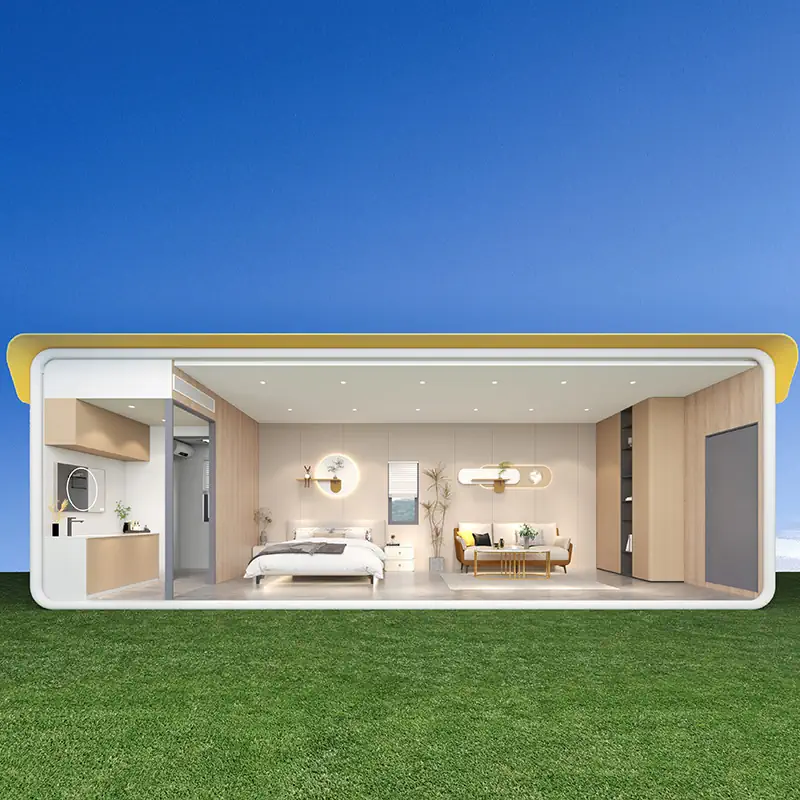
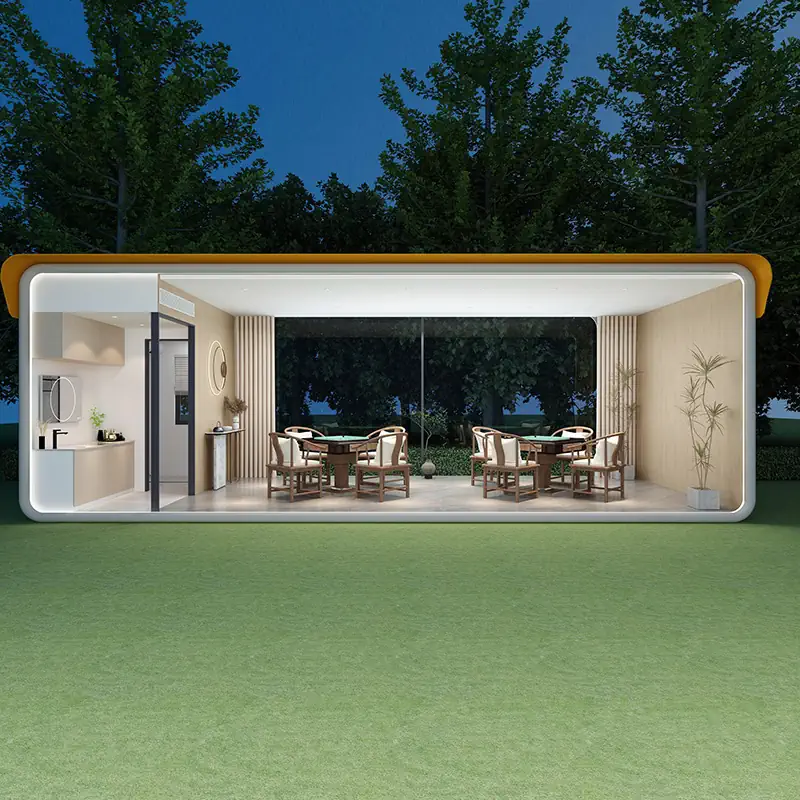
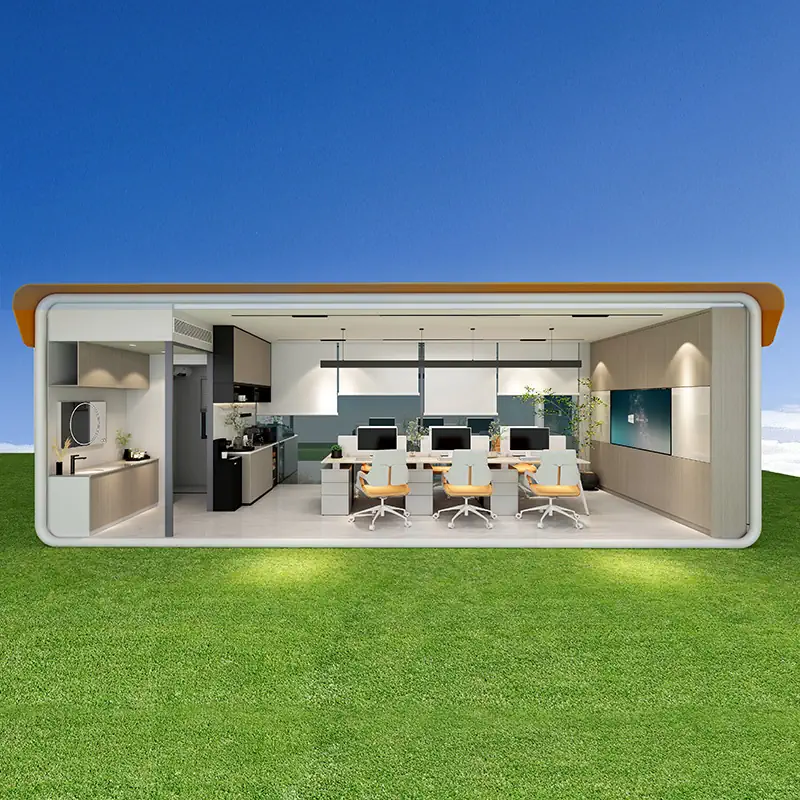
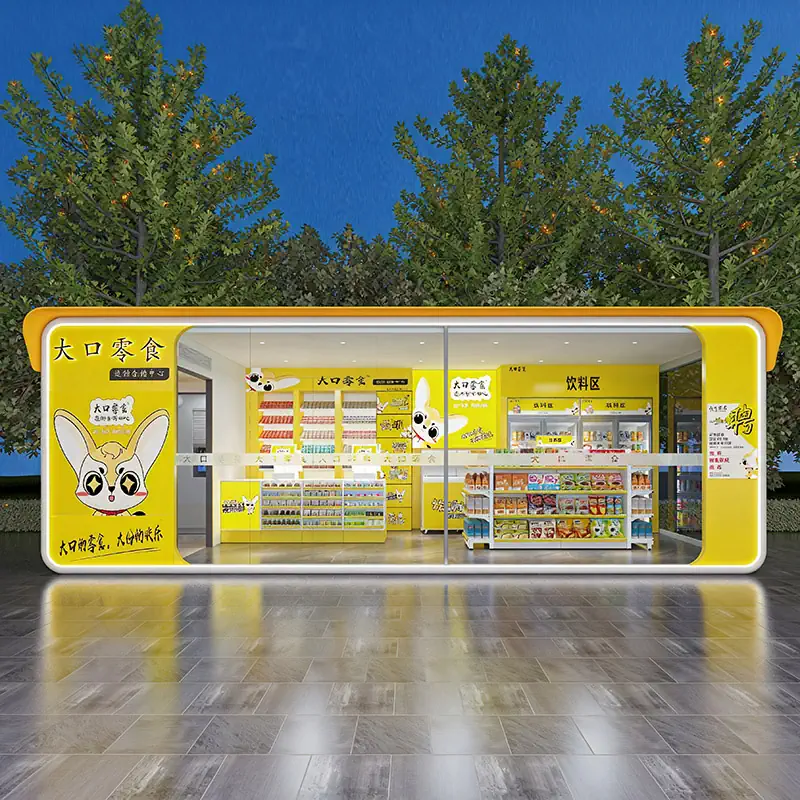
The Box Apple Pod delivers maximum utility in a rectilinear footprint. Flat walls accommodate standard fixtures without custom fabrication, spanning glass-front retail stores, acoustic offices, minimalist tea retreats, and self-contained studio apartments with full kitchens and wet baths. Each unit arrives factory-finished with independent climate, power, and data systems. Deploy standalone as a backyard ADU or revenue kiosk, or cluster into retail streets and housing villages. No excavation, no construction delays, no lease negotiations—just level, connect, and occupy. For immediate spatial solutions, four walls, a roof, and infinite possibility.
Rectilinear volumes maximize usable floor area per square meter of shell, eliminate unusable corner voids, and accommodate standard furniture, fixtures, and racking without custom fabrication. Flat walls also simplify interior finishes, signage mounting, and utility routing, reducing both capital cost and long-term maintenance.
Box Apple Pods are engineered to permanent building codes and qualify as permanent structures in most jurisdictions. The Backyard Studio Pod specifically meets ADU regulations across North America, while Retail and Office pods carry structural calculations for snow, wind, and seismic loads required for commercial permitting.
All pods are designed for grid-tied operation as standard, with off-grid packages available. The Studio Pod accepts composting toilets and greywater systems; the Retail Pod can run on generator or solar with battery backup; and the Office Pod supports Starlink and cellular boosters for connectivity in remote locations.
Yes. The rectilinear geometry is specifically designed for clustering. Retail pods align into shopping rows; Office pods pair into suite configurations; and Studio pods stack or array into workforce housing courtyards. Shared wall panels, connecting corridors, and unified utility mains allow collections to function as cohesive buildings rather than isolated containers.
Please send your detailed request here, our team will get back to your in 12 hours. All your information will be strictly protected by us.